Read the Room: low light, gold and the Morgan Library
On low light, gilded surfaces and the Gilded Age interior of The Morgan Library.
Commissioned by Pierpont Morgan and completed in 1906 by McKim, Mead and White, the building is an exercise in deliberate permanence. Italian Renaissance in its bones, monumental in its intention, it was designed not simply to house a collection but to consecrate one. Walking into the rotunda, pendant lights suspended from fresco ceilings, the signal is immediate: this room was built to outlast everyone who enters it.
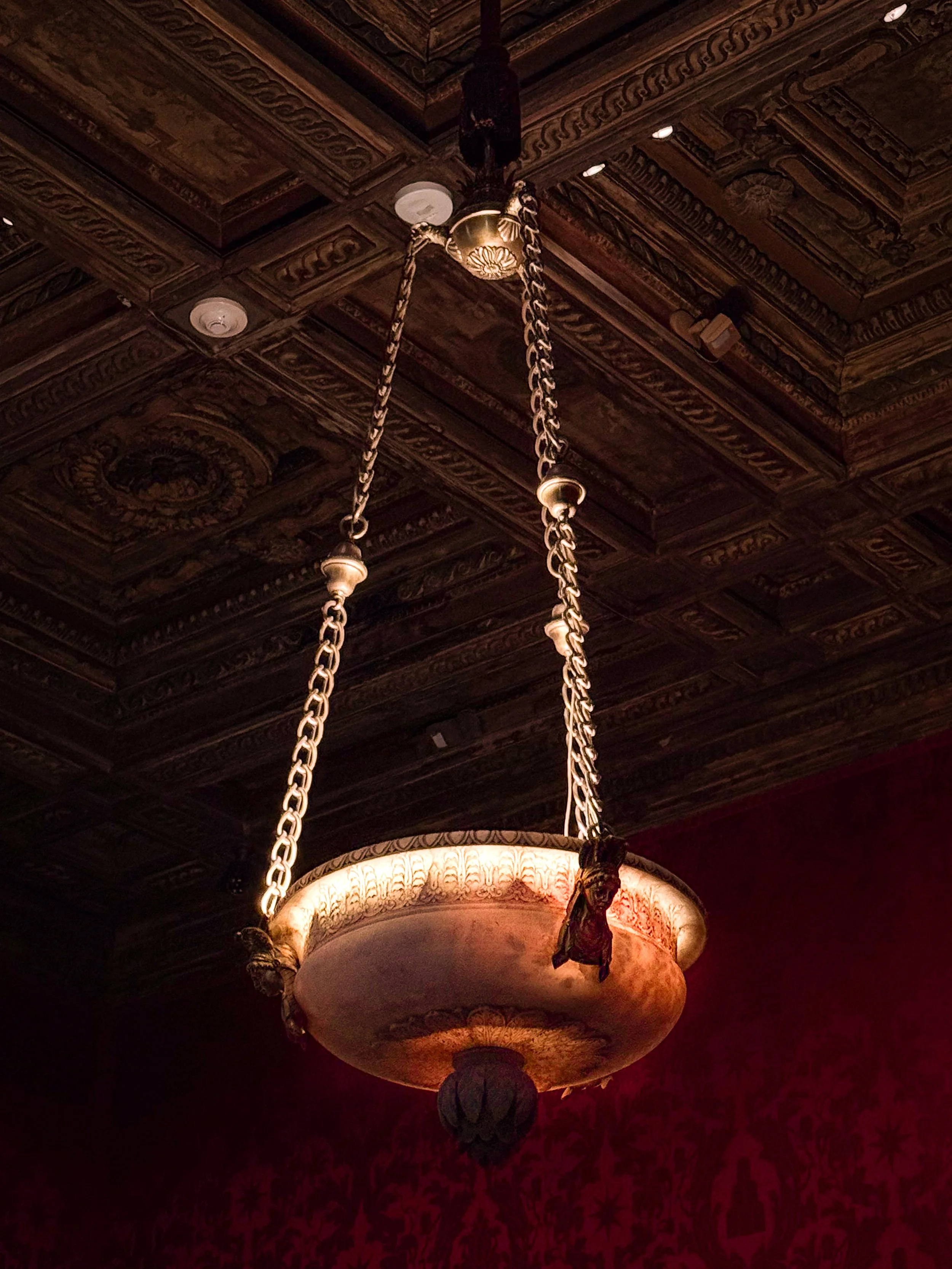
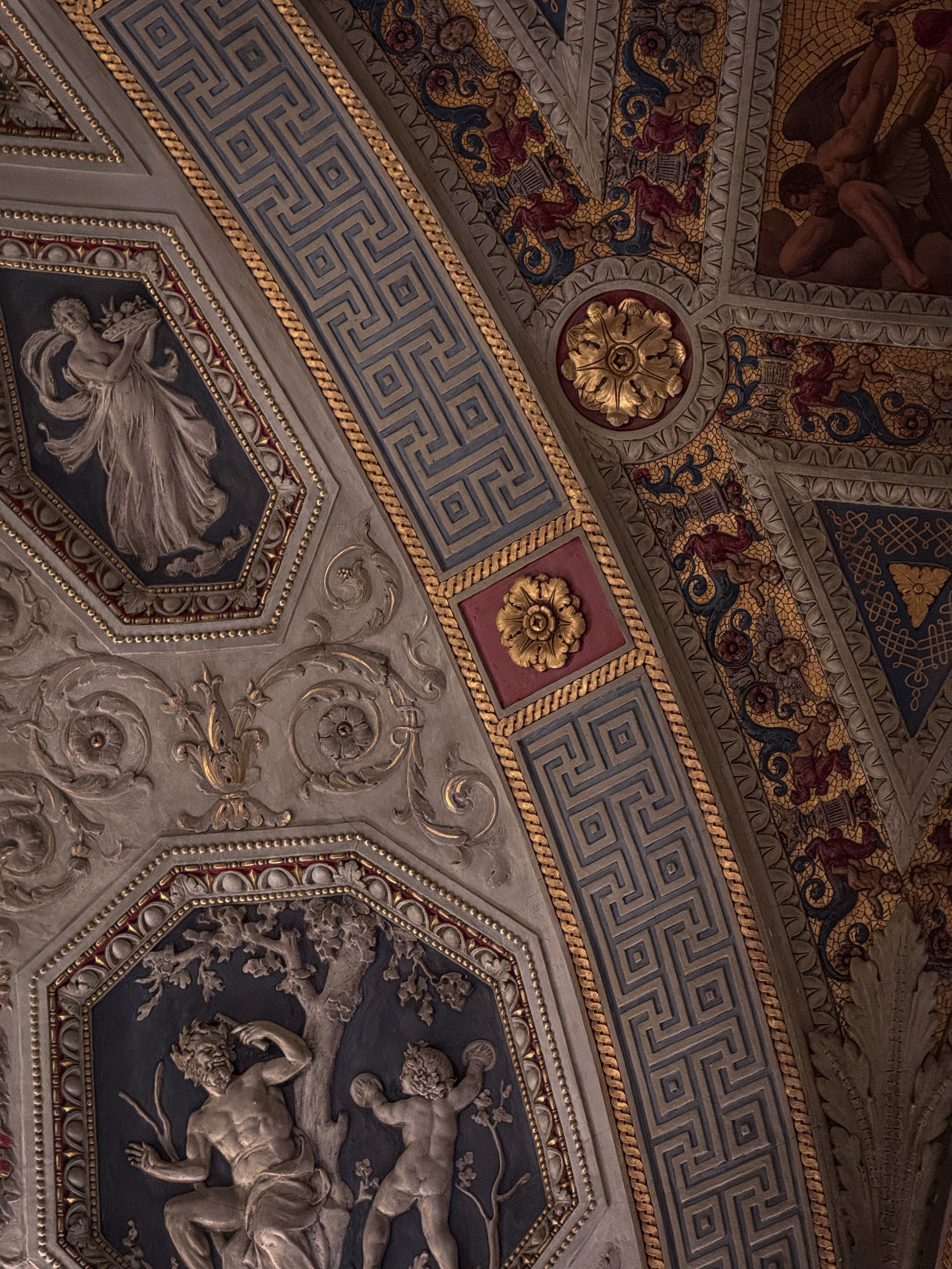
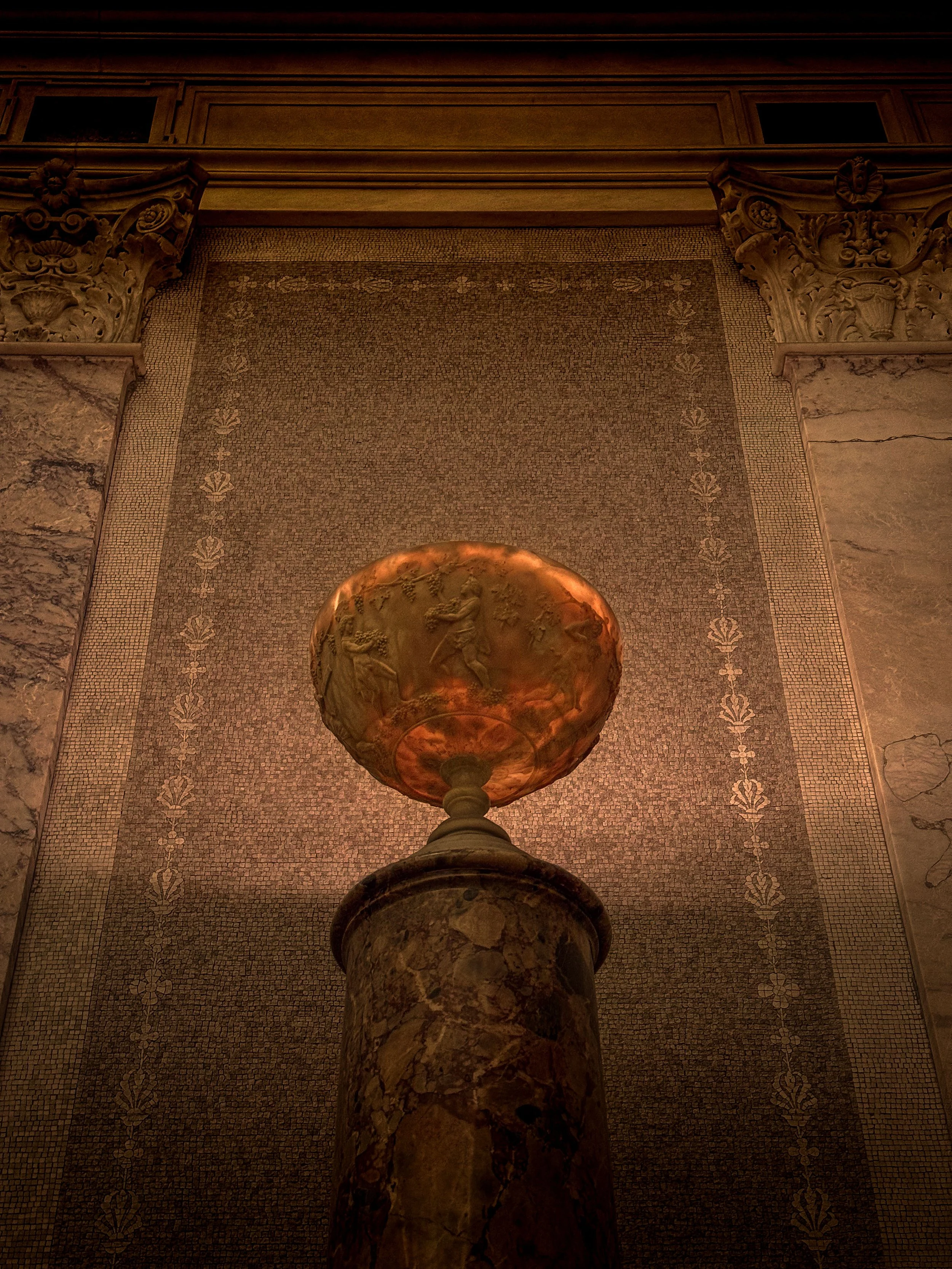
The East Room stops you in your tracks. Three tiers of bookshelves rising to a painted ceiling, manuscripts behind glass, the kind of preservation atmosphere that makes you lower your voice and walk in wide eyed silent awe. The light is low, directional and entirely intentional. Every angle is drawn from a Caravaggio: shadows become structural. The light serves only to illuminate the gold, guilded across frescos, mosaics and fouled into countless precious manuscripts.
Working in these conditions demands a different kind of attention. Your eye adjusts slowly and what emerges in that adjustment is detail that a brighter room would flatten entirely.
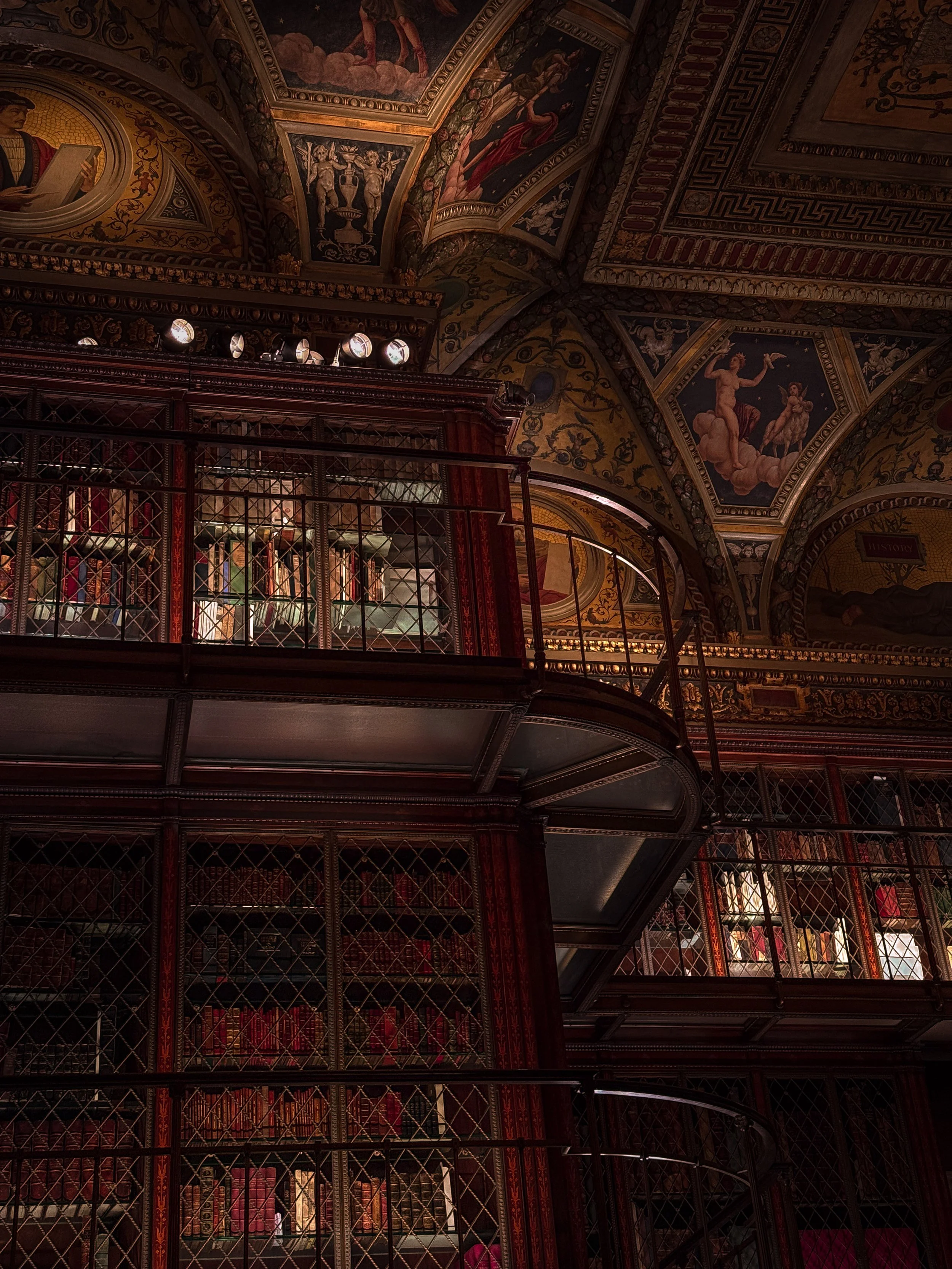
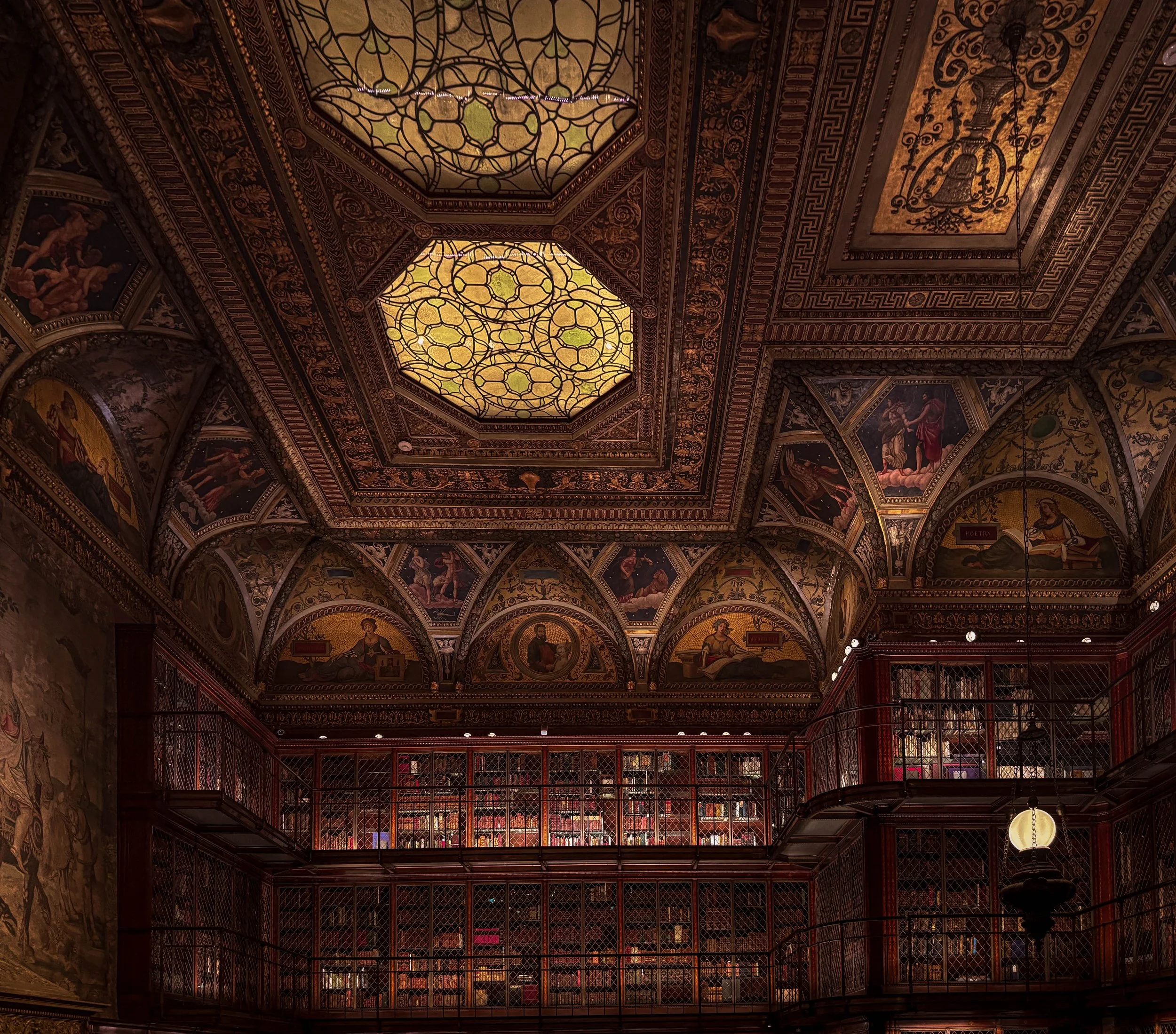
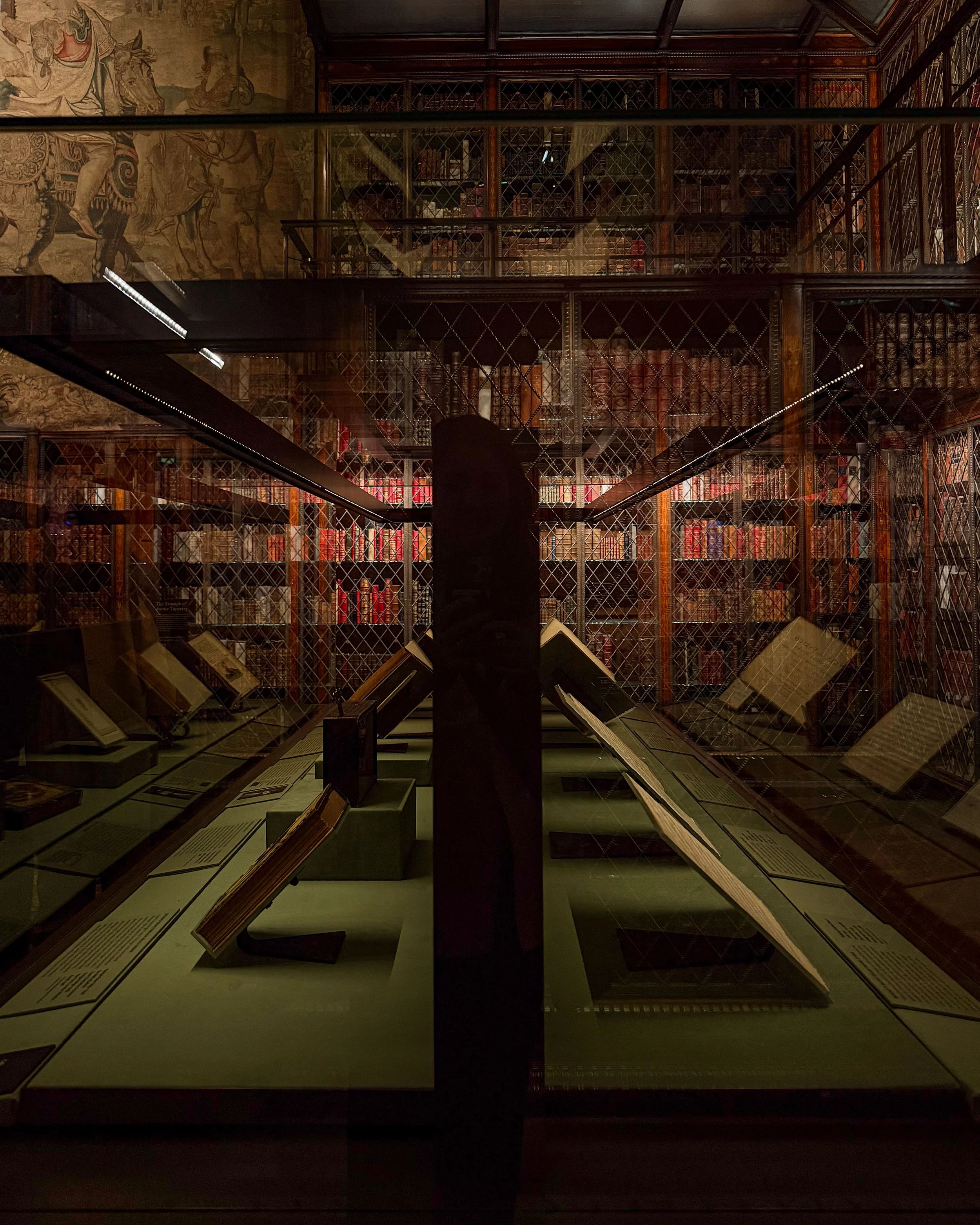
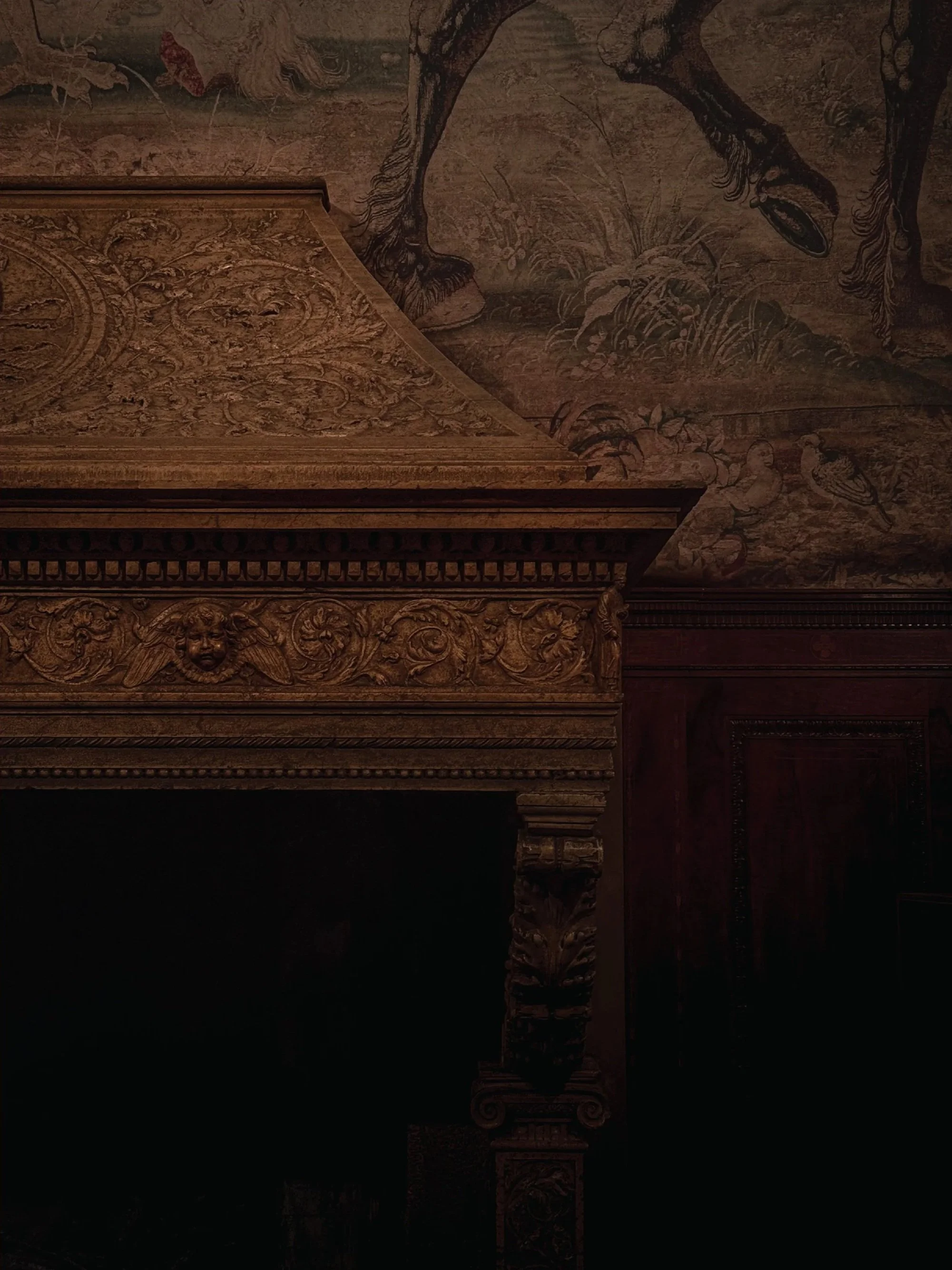
The ceiling frescos and stained glass fixtures were commissioned in 1906 from H. Siddons Mowbray, whose reference point was the Stanza della Segnatura in the Vatican, the room Raphael painted for Pope Julius II. The connection is not incidental. Morgan wanted decoration that could hold its place against the collection beneath it, and Mowbray's trompe l'oeil ceiling does exactly that: illusionistic depth painted onto a flat surface, drawing the eye upward into a room that does not technically exist.
Photographing painted ceilings in low light is an exercise in patience. The gold surfaces catch and release depending on angle, on the distance of the stained glass fixture from the frame, on whether the ambient light in the room is coming from one direction or several. What looks faded to the naked eye becomes luminous under the right conditions. Finding those conditions is the work.
For enquiries, studio@atelieretal.com